
射雕英雄传
China’s youth turn to immersive disaster simulations to learn survival skills_我的网站

A |
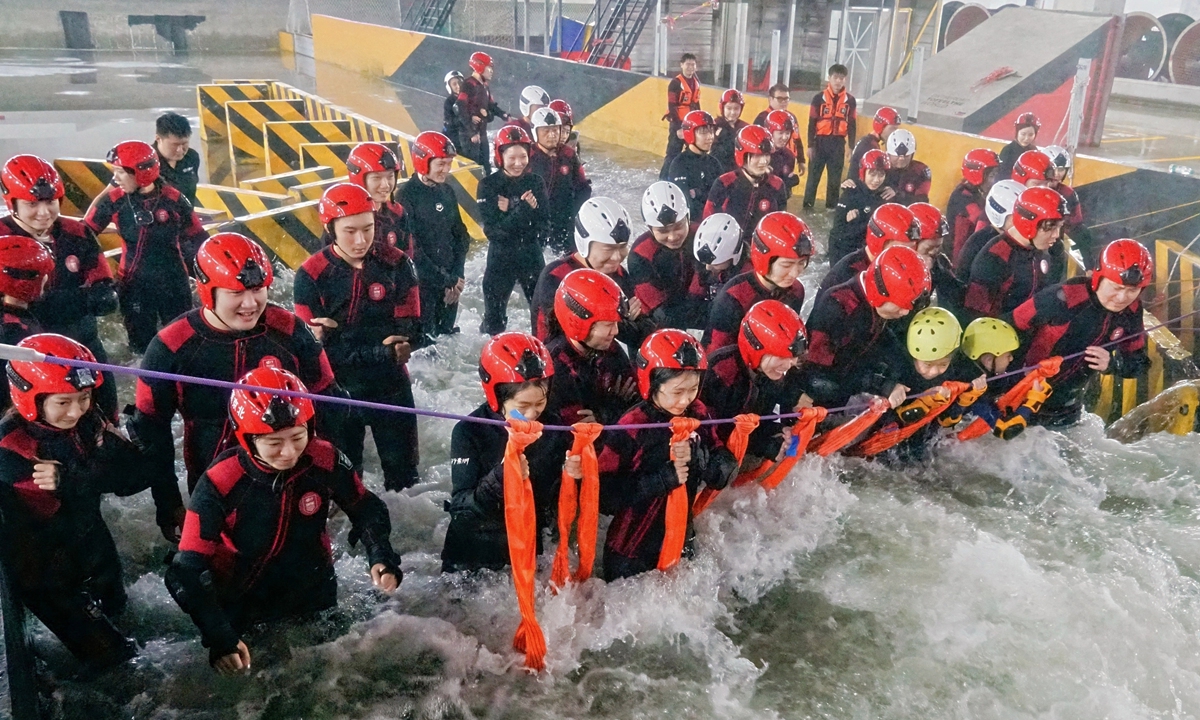
As heavy rain associated with Typhoon Dolphin continued to affect large parts of China, an increasing number of people were turning to immersive disaster simulations to experience extreme weather scenarios in a controlled environment at the Lvxing Disaster Simulation Training Center in Hangzhou, East China's Zhejiang Province.
At the country's first natural disaster simulation venue, adult participants pay 899 yuan ($133) per person to virtually confront situations such as typhoons, urban flooding and sudden flash floods, to gain a sense of what such emergencies might feel like.
Wang Kuanghan, operator of the training center, told the Global Times that the center is designed to allow people to experience the dangers of natural disasters in a safe and controlled environment, while raising awareness of the need to respect nature and avoid potential risks.
"We hope to pass on the experience we gained from encountering natural disasters during our years of traveling around the world," Wang said. "Beyond teaching people how to respond when natural disasters strike, what is more important is cultivating an awareness of how to avoid risks."
As of July, the center had received more than 70,000 visits this year for hands-on experiences, including tourists as well as companies and professional rescue teams that come for training. The number is higher than the same period in 2025, he noted.
Fu Minya, a Hangzhou-based office worker, told the Global Times that she has heard of the center and would like to give it a try.
"The frequent news reports of natural disasters in recent weeks have reminded people of how small and vulnerable we are in the face of nature's forces," she said.
After Typhoon Dolphin made landfall in China in early August, its remnant impact brought downpours to several provinces. Chinese authorities previously earmarked 80 million yuan to support flood and geological disaster relief efforts in the Central China's Henan and Hubei provinces and East China's Anhui Province, the Xinhua News Agency reported.
The flash flood simulation is one of the most intense experiences the center offers. Participants stand in a simulated river channel as an instructor presses a button, releasing around 500 tons of water from above. Within just three seconds, many participants are knocked off their feet, left tumbling in the rushing water and being swept toward the protective wall at the end of the channel.
"Real flash floods move even faster," said Wang. "When the water rises above knee level, it is almost impossible for an adult to remain standing. Many people instinctively think they should swim to escape, but that can be fatal."
Flash floods carry mud, branches and rocks that can quickly entangle your arms and legs. The right thing to do is to watch for warning signs of an impending flash flood, move away from the riverbank before the flash flood occurs, and quickly evacuate to higher ground on either side, he said.
In another exercise, several participants slog ahead holding each other's arms as the facility simulates winds reaching speeds of up to 165 kilometers per hour, as well as torrential rain.
However, there are concerns that simulated disasters could trivialize the suffering of disaster victims and turn the trauma of real-life disasters into entertainment.
This is a promising new niche in urban cultural tourism, Yu Jinlong, a Beijing-based cultural scholar, told the Global Times on Wednesday.
By striking the right balance between entertainment and public education while strictly adhering to safety protocols, such facilities can become more than just viral check-in destinations; they can serve as a replicable platform for public emergency education, Yu noted.
In the past, disaster-prevention education largely relied on display boards and lectures, which often made it difficult for people to develop an intuitive understanding of the dangers involved, Yu said.
Real-life simulations, by contrast, allow participants to experience firsthand the destructive force of typhoons and flash floods, turning abstract knowledge into tangible memories. This is where such facilities can offer unique social value, making them particularly suitable for educational programs for young people and emergency-response training for businesses and institutions, he said.
The experience can be impactful, but it should not be reduced to a sensationalist spectacle. Only by combining immersive experiences with practical self-rescue training and maintaining strict safety standards can this emerging model continue to serve as a meaningful platform for public disaster-prevention education, Yu noted.
Statistics show that 95 percent of people rescued from natural disasters survive through self-rescue, Wang said. "If you are swept away by water or hit by strong winds here, you will develop a much deeper understanding of how to respond to hazards and protect yourself."
。 机构席位买入844.48万 北交所上市公司维琪科技登龙虎榜 每经讯,2026年8月25日,北交所上市公司维琪科技(920176,收盘价:60.78元)登上龙虎榜,交易方式是连续竞价,披露原因是当日换手率达到42.28%,成交数量336.04万股,成交金额2.01亿元。买一席位为机构专用,买入844.48万元;卖一席位为国信证券股份有限公司深圳互联网分公司,卖出2648.84万元。 (记者曾健辉) 免责声明:本文内容与数据仅供参考,不构成投资建议,使用前核实。据此操作,风险自担。

B | 每日经济新闻 。
Current article:http://s1anqq1.qiuergejiaolaiaozhuangshi.buzz/s5i/9cnds.html
Published on:13:39:17


1
花200块钱,成为一支91岁球队的赞助商2
Lululemon 7折优惠、牛车水七夕庆祝活动、九鲜5.9新币套餐3
Detroit synagogue president found stabbed to death outside home4
新思想引领新征程丨优质医疗资源下沉惠民 绘就健康中国新图景5
江苏体彩近千家志愿服务驿站建成启用6
竟然用石头排队占座,新加坡人你还能再夸张一点吗?7
刷屏!她因美貌在新加坡一夜爆红!揭秘新加坡组屋楼下的神秘行业...8
京东回应说,iPhone的降价是苹果授权的,苏宁表示这是年终折扣。9
抖音“验证助手”升级:可查验“二维码”是否为抖音官方活动10
范家乡首届露营节正式启动11
中金:钽铌行业供需格局重塑 战略价值重估12
约6700元!索尼Xperia 5 IV即将开启预售 骁龙8加持_支持_手机13
强台风“沙德尔”登陆区域锁定!今早距离宁波约600公里,明后天宁波部分地区暴雨,局部大暴雨14
Boman Irani's Look From Prabhas's The Raja Saab Is Intriguing15
“这次对华让步,特朗普该羞得没脸见人”
- 随机推荐
1
Xi, Putin detail 'deepening' relations between Beijing and Moscow during conference in China2
我,172cm模特,有人想买房包养,被我一口回绝,靠自己活出自我3
当算法参与决策,安全如何保障4
CDPR CEO 谈《巫师 4》:超 500 人倾力打造,迄今最大、最大胆、最具雄心作品5
炎炎烈日送清凉6
全面涨价潮来袭,史诗级成本大转移正在上演7
2026年黄河流域找矿突破与生态修复技术发展大会在济南举行8
问今课堂怎么样?聊聊AI知识普惠的在线学习平台的合规小知识9
甘肃庆阳公安快速查处一起扰乱公共秩序案件_直播_涉案10
WAIC2026:AI焦虑笼罩黄浦江11
宝马与北方合作:概念露营车展示面料外壳12
Ranil justifies tax hikes amidst criticism13
Amazon Probed by British Competition Watchdog14
【仓单】8月26日大商所PVC期货仓单较上一日下降976手15
斯科特:执教鹈鹕时有球员对科比喷垃圾话 他随后砍下50分